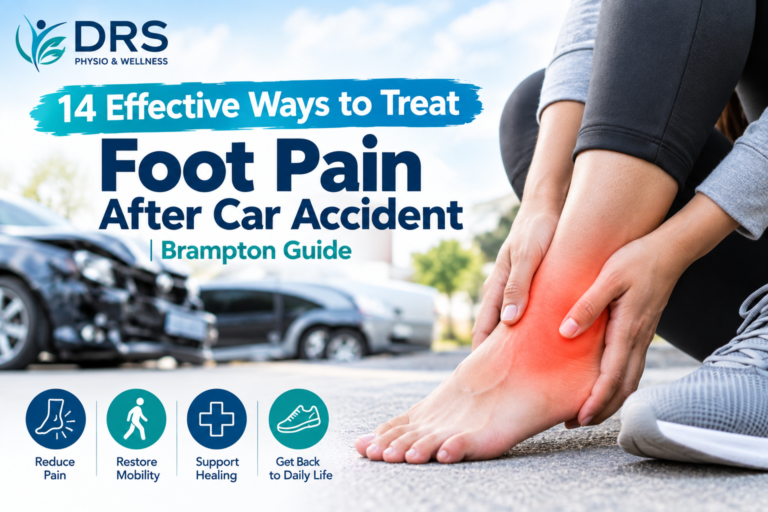
Foot Pain After Car Accident: Complete Brampton Recovery Guide
Foot pain after car accident is extremely common, especially when drivers brace against the brake pedal or experience floorboard impact during collision. The foot contains 26 bones, multiple ligaments, tendons, nerves, and weight‑bearing structures — making it highly vulnerable to trauma. Many Brampton patients experience foot swelling after accident, foot stiffness, difficulty walking, heel pain, nerve irritation, or forefoot discomfort. This guide explains symptoms, causes, evidence‑based treatment options, insurer‑friendly rehabilitation, and how DRS Physio & Wellness supports your full recovery.
Symptoms of Foot Pain After Car Accident
Sharp or aching pain in the foot
Pain in the heel, arch, forefoot, or midfoot
Difficulty weight‑bearing
Foot swelling after accident
Bruising or discoloration
Numbness or tingling in the toes
Pain when walking or standing
Clicking or catching in the foot
Reduced range of motion
Plantar fascia irritation
Causes of Foot Pain After Car Accident
- Direct impact with the floorboard
- Bracing force during sudden braking
- Pedal crush injuries
- Sudden twisting of the foot
- Foot sprain car accident
- Foot strain car accident
- Midfoot ligament injury
- Forefoot contusion
- Heel pad trauma
- Nerve compression
- Joint capsule irritation
- Metatarsal bone bruising or fracture
14 Effective Ways to Treat Foot Pain After Car Accident
1. Acute Inflammation & Swelling Control
Cold therapy and compression reduce swelling and early pain.
2. Foot Joint Mobility Restoration
Physiotherapy restores movement and reduces foot stiffness after accident.
3. Tendon & Ligament Strengthening
Strengthening stabilizes the foot and prevents chronic pain.
4. Soft‑Tissue Release for Forefoot & Midfoot Contusions
Massage therapy improves circulation and reduces muscle guarding.
5. Plantar Fascia Rehabilitation
Targeted stretching reduces plantar pain after accident.
6. Heel Pad Trauma Management
Techniques reduce heel pressure and improve shock absorption.
7. Nerve Compression Relief
Chiropractic and physiotherapy reduce nerve irritation in the foot.
8. Laser Therapy for Tissue Repair
Laser therapy accelerates healing of strained ligaments and tendons.
9. Ultrasound Therapy for Deep Tissue Modulation
Ultrasound reduces inflammation and improves tissue elasticity.
10. Gait & Weight‑Bearing Retraining
Correcting walking patterns prevents reinjury and improves stability.
11. Foot Stabilization & Arch Support
Strengthening surrounding muscles reduces pressure on the foot.
12. Bracing or Support for Impact‑Related Foot Injuries
Temporary support reduces strain during early recovery.
13. Metatarsal & Midfoot Protection Strategies
Padding and off‑loading reduce pressure on injured bones.
14. Home Exercise Program for Long‑Term Recovery
A structured home program prevents stiffness and improves functional mobility.
Treatment Overview
Foot pain after car accident requires a structured rehabilitation plan that includes mobility restoration, strengthening, soft‑tissue healing, gait retraining, and insurer‑friendly documentation. At DRS Physio & Wellness, clinicians create personalized treatment plans based on your injury severity, functional limitations, and insurance coverage.
Evidence-Based Resources for Foot Pain After Car Accident
To support medical accuracy and provide readers with reliable information about foot injuries following a motor vehicle accident, the following resources cover traumatic foot pain, sprains, fractures, diagnosis, imaging, and Ontario accident benefits.
Mayo Clinic — Foot Pain
Mayo Clinic provides information about common causes of foot pain, including traumatic injuries such as broken feet, broken toes, fractures, and tendon injuries. It also explains when foot pain following an injury should be evaluated by a healthcare professional.
Cleveland Clinic — Foot Pain
Cleveland Clinic explains the causes of foot pain, including injury and trauma, sprains, strains, fractures, tendon injuries, and nerve-related symptoms. The resource also discusses evaluation and treatment considerations.
AAOS OrthoInfo — Sprains, Strains & Other Soft-Tissue Injuries
AAOS OrthoInfo — Sprains, Strains & Other Soft-Tissue Injuries
The American Academy of Orthopaedic Surgeons provides information about sprains and other soft-tissue injuries involving the foot and ankle, including symptoms such as pain, bruising, swelling, and inflammation, as well as rehabilitation and bracing considerations.
AAOS OrthoInfo — Toe and Forefoot Fractures
AAOS OrthoInfo — Toe and Forefoot Fractures
This AAOS resource covers fractures affecting the toes and forefoot, including symptoms such as pain, swelling, bruising, and pain with walking or weight-bearing. It also discusses examination, imaging, treatment, and recovery.
AAOS OrthoInfo — Sprained Ankle
AAOS OrthoInfo — Sprained Ankle
Although focused on the ankle, this resource is relevant to foot and ankle trauma because ankle sprains involve the ligaments supporting the ankle and can cause pain, swelling, bruising, instability, and difficulty bearing weight. AAOS also discusses rehabilitation and when imaging may be required to rule out fractures or other injuries.
American College of Radiology — Acute Trauma to the Ankle
ACR Appropriateness Criteria — Acute Trauma to the Ankle
The American College of Radiology provides evidence-based guidance on imaging following acute ankle trauma, including situations where radiographs are negative but ligament injury, dislocation, or other significant injury remains suspected. This is useful when discussing the role of diagnostic imaging after a motor vehicle collision.
Ontario — Statutory Accident Benefits Schedule
Ontario e-Laws — Statutory Accident Benefits Schedule (O. Reg. 34/10)
Ontario’s Statutory Accident Benefits Schedule provides the legislative framework for accident benefits following eligible motor vehicle accidents, including medical and rehabilitation benefits.
FSRA — After an Accident: Understanding the Claims Process
FSRA — After an Accident: Understanding the Claims Process
The Financial Services Regulatory Authority of Ontario provides information about the auto-insurance claims process and Statutory Accident Benefits. FSRA states that medical, rehabilitation, and attendant-care benefits remain mandatory for policies entered into on or after July 1, 2026, while certain other accident benefits are optional depending on the policy.
Insurance Coverage
In Ontario, foot pain after car accident is covered under auto insurance accident benefits. DRS Physio & Wellness assists with OCF‑18 submissions, treatment plans, progress notes, and insurer communication to ensure your rehabilitation is approved and funded.
Recovery Timeline
Week 1–2: Swelling reduction, pain control
Week 3–6: Mobility restoration, strengthening
Week 6–12: Gait retraining, functional recovery
3+ months: Chronic pain prevention, long‑term stability
Book Your Car Accident Injury Appointment
If you’re experiencing hip pain after car accident, our Brampton clinic provides safe, effective, and personalized care — whether you’re dealing with impact‑related pain, inflammation, stiffness, nerve irritation, or mobility limitations affecting your daily movement.
Explore all our services at DRS Physio & Wellness or book your car accident injury appointment today through WhatsApp.
If you don’t use WhatsApp, send us a TEXT — we’re available 24/7 for SMS chat.
In‑Home Appointments: Prefer mobile care? Book in‑home car accident injury treatment at DRS Mobile Therapy
Need Legal Support After Your Accident? If your pain is related to a motor vehicle accident claim and you need help with legal guidance, documentation, or next steps, visit our Personal Injury Legal Support page.

Haninder Dhillon
Co-Owner & Co-Founder
DRS Physio & Wellness | DRS Mobile Therapy
1090 Peter Robertson Blvd Unit 105
Brampton, ON L6R 3B3