
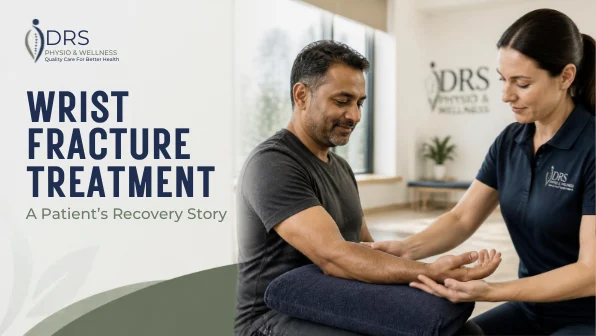
Wrist Fracture Treatment Brampton: Post‑Fracture Mobility Restoration
Based on a Real Patient Review
This story is based on a real patient experience at DRS Physio & Wellness and a review publicly shared by the patient.
The patient’s identity and identifying details have been withheld to protect their privacy.
Clinical information has been summarized for educational purposes. Every fracture and recovery experience is different.
What the Patient Shared
“When I first started treatment, I had no movement in my wrist, fingers, or even up to my elbow. After just 2–3 treatments, I began regaining movement…”
Excerpt from a publicly posted Google review. Identity withheld for privacy.
That review described the significant loss of movement the patient was experiencing and the improvement they noticed after beginning treatment.
After the Injury
The patient came to DRS Physio & Wellness after sustaining a wrist fracture that required immobilization.
When treatment began, the patient was experiencing:
- Pain, tightness, and throbbing in the wrist
- Forearm tightness and reduced mobility
- Difficulty gripping, lifting, and rotating the wrist
- Limited finger movement
- Reduced elbow mobility
After a wrist fracture and a period of immobilization, stiffness and loss of movement can make everyday activities difficult. For this patient, restoring movement and getting back to normal use of the arm were important goals.
The Treatment Approach
Treatment was planned around the patient’s symptoms, mobility limitations, and functional goals.
Chiropractic Care
Gentle, controlled techniques were used to address areas of restricted movement involving the wrist, forearm, and surrounding areas.
Interferential Current Therapy (IFC)
IFC was incorporated into treatment as part of the patient’s overall rehabilitation plan.
Hot and Cold Therapy
Hot and cold applications were used as appropriate based on the patient’s symptoms and clinical presentation.
Soft-Tissue Techniques
Targeted soft-tissue work was used around the wrist and forearm to address areas of tightness and discomfort.
Wrist, Hand, and Forearm Mobility Exercises
Exercises were introduced to gradually work on movement in the wrist, fingers, forearm, and elbow and improve functional use of the arm.
The treatment plan was adjusted as the patient’s symptoms, mobility, and tolerance changed.
The Patient’s Recovery
The patient reported noticing improvement after the first few treatment sessions.
By the third treatment session, they described:
- Increased wrist movement
- Better finger mobility
- Reduced forearm tightness
- Improved ability to use the affected arm
The patient later reported returning to normal daily activities within approximately two weeks of starting treatment.
They also shared that their orthopedic surgeon was impressed with their progress.
That was this patient’s experience. It should not be viewed as a typical recovery timeline or a promise of similar results. Recovery after a wrist fracture varies from person to person.
Wrist Stiffness After a Fracture
Following a wrist fracture and immobilization, some patients experience wrist stiffness, limited range of motion, reduced grip strength, or difficulty using the hand normally.
Rehabilitation may focus on gradually restoring wrist and forearm movement, strength, and functional use of the hand and arm. The appropriate approach depends on the fracture, how it was treated, the stage of healing, and the patient’s individual needs.
Clinical practice guidelines for distal radius fracture rehabilitation recommend assessing areas such as wrist and forearm range of motion and grip strength, with appropriately timed therapeutic exercise and other rehabilitation strategies used according to the individual and their fracture treatment. 2024 JOSPT Clinical Practice Guideline
A Clinician’s Perspective on Wrist Fracture Treatment Brampton
Dr. Dhillon
“With fracture recovery, the first step is understanding what movement the patient has lost and how the injury is affecting their daily life.
From there, we build a treatment plan around safe mobility restoration and functional goals.
The aim is to help patients work toward getting back to their normal activities.”
If You’re Recovering From a Wrist Fracture
If you’re dealing with wrist pain, stiffness, weakness, or limited movement after a fracture, getting assessed can help you understand what may be contributing to your symptoms.
DRS Physio & Wellness provides wrist fracture treatment Brampton, including physiotherapy, chiropractic care, mobility restoration, and functional retraining.
You can explore our Recovery Resources to learn more about injuries and rehabilitation.
Have questions about your situation? We’re here to help.
Call us: 905-793-5554
Text us: 289-277-6877
WhatsApp: Click the WhatsApp button below to message our team.
Live Chat: Click below to chat with our agents 24/7.
Choose whichever option is easiest for you. We’ll be happy to help you understand your next steps.
Final Thoughts from Dr. Dhillon
“Every recovery story is unique.
When someone comes in after a fracture with limited movement, the first priority is understanding what they’re experiencing, both physically and functionally. What can’t they do? What matters most to them? What do they need to get back to?
Seeing a patient regain movement after weeks of immobilization and watching them return to normal activities within a short period is meaningful. It reinforces how important careful assessment, consistent treatment, and patient trust truly are.
We never take that trust for granted.”

Haninder Dhillon
Written by: Haninder Dhillon, Owner & Co-Founder
Clinical perspective: Dr. Dhillon, Clinic Lead & Co-owner
DRS Physio & Wellness | DRS Mobile Therapy
1090 Peter Robertson Blvd, Unit 105
Brampton, ON L6R 3B3